No one knew anymore who had set up the first lantern.
The people of Hainried claimed the custom was older than the village itself. Their grandparents had already seen the hollowed fruits before the doors, and their grandparents in turn had said they were already there when the first houses were built.
Hainried lay deep between forested hills. In summer the soil was fertile and dark. In autumn the fog rose from the river and sometimes stayed between the houses for days.
You could not see from one end of the village to the other.
On the last day of the harvest, every family placed a lantern before their house.
The fruit was hollowed out, a face carved into it and a small flame set inside. Some grimaces grinned. Others looked sad or had only two simple holes through which the fire fell outward.
Every lantern belonged to a name.
The face of someone who had died in the past year was carved into it, and a cup placed on the threshold for them. If no one in the family had died, the lantern bore the face of an ancestor whom someone still remembered.
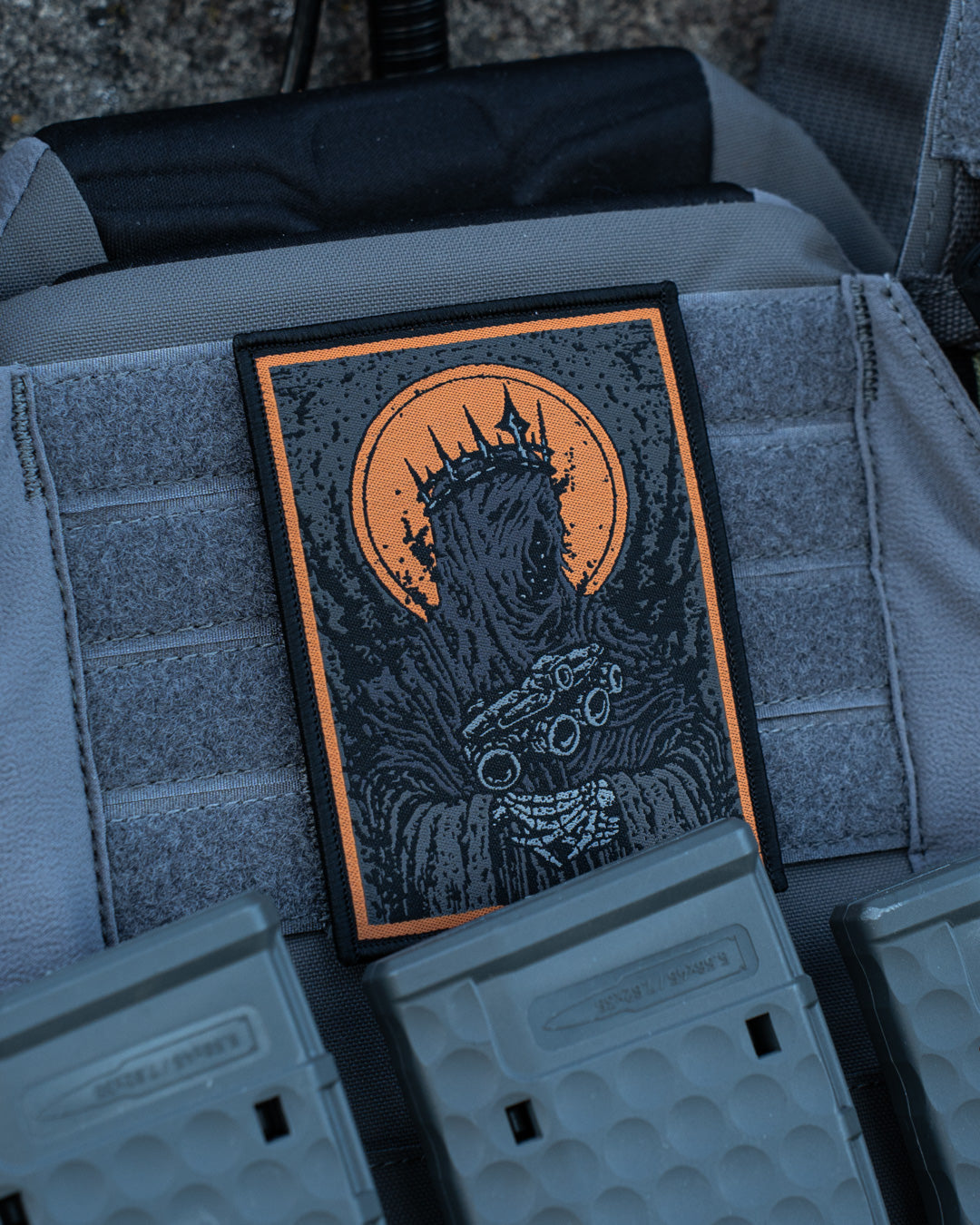
One further lantern stood at the northern path.
It had no face.
It was for those whose names no one knew anymore.
After dark fell, the inhabitants put on masks. No one went into the street with their own face. Children wore simple pieces of wood before their eyes, old women tied painted cloths around their heads, and even the men who had mocked the custom during the day did not leave their houses until they had hidden their faces.
The masks were meant to confuse the dead.
Because not everyone who returned found the right door.
And not everyone still remembered their own face.
In the year when Lord Konrad von Schwarztann took over the valley, the harvest was poor.
The summer had been too dry. The grain stayed low, several wells ran dry and in late summer a sickness worked its way through the pigsties. Yet Konrad demanded the same levies as in the years before.
He had only owned the land for a few months.
A distant prince had granted him Hainried because Konrad had promised him men, wagons and more money in the war than he actually possessed. Now the village had to deliver what his storehouses lacked.
Konrad lived in the old manor house above the river. It was not a castle, though he insisted on calling it one. The roof was leaking in several places, the walls damp and the coat of arms above the entrance so freshly painted that black dye still ran down it in the rain.
He brought twelve armed men with him.
And a clerk named Jost Karg, who noted for every house how much grain, livestock and oil remained to be taken. Jost kept his books cleanly and without anger. He did not need to beat anyone. He only wrote down who was to be beaten.
When the villagers explained that on the evening of the last harvest, part of the oil was needed for the lanterns, Konrad initially believed they were mocking him.
„You burn my oil in hollowed vegetables?“
The village elder said it was not his oil.
Konrad had him tied to the post before the storehouse before the day was out.
He remained there until evening.
Every inhabitant who delivered grain had to pass him. The old man spoke to no one. Only when Konrad himself appeared did he raise his head.
„Tonight the paths do not belong to you.“
Konrad looked toward the first wisps of fog already standing between the houses.
Then he laughed.
He had all the lanterns collected.
His men went from house to house, kicked against doors and took everything that had already been prepared. Some fruits bore only roughly cut grimaces. Others had been worked with great care. On one, a soldier recognized the face of a small girl.
He held it up by the hair of dried straw and asked the mother whether the child had at least been prettier than her likeness.
The woman did not answer.
All the lanterns were brought to the manor house.
Konrad wanted to use the custom for his own celebration. He had the fruits arranged in the hall, on the stairs and along the courtyard. More than a hundred faces finally looked out from the flickering light.
„You see,“ he said to his men. „Now the dead at least know who is lord here.“
Jost suggested collecting the masks as well.
If the farmers were not going to venture out of their houses that night anyway, they could be sold to traders the following year. Some were old and skillfully carved. Others were made of hide, leather or painted wood.
Before sunset, Konrad's men took those too.
In the manor house they distributed the masks among themselves. One soldier put on the face of an old woman. Another wore a black animal head whose horns had broken off at the tips. Jost found a smooth white mask without a mouth and set it beside his ledger for the time being.
Konrad himself chose the largest.
It showed a broad, laughing face with crooked teeth. On the forehead stood two wooden protrusions that could have represented horns or dead branches.
When darkness fell, the celebration began.
The villagers' oil burned in the lanterns. On the tables stood the meat from their stables, along with bread from the last grain and wine Konrad had ordered from a neighboring valley, although several of his men had still not been paid.
Outside, Hainried disappeared into the fog.
In the houses the inhabitants sat without masks and without light.
They spoke quietly. Some still placed a cup on the threshold. Others sat in the dark at laid tables where one place remained empty.
Only the lantern at the northern path still burned.
Konrad's men had overlooked it.
Perhaps they had not seen it.
Perhaps they had not dared to touch a lantern without a face.
In the manor house, the drinking continued.
The soldiers danced in the stolen masks, called out the names of villagers and imitated their voices. One stood before a lantern that bore the face of an old man and asked whether he was satisfied with his new appearance.
The flame inside went out.
Shortly after, a second light went dark.
Then a third.
Jost noticed it first.
He stood at the edge of the hall trying to add up the outstanding levies. Every time a lantern went out, he raised his head.
„The oil is bad,“ said Konrad.
But the lamps on the tables kept burning.
Only the faces went dark.
Around midnight there was a knock at the door.
The men fell silent.
The sound was not loud. Three times wood against wood, slowly and without haste.
Konrad motioned to a soldier.
The man still wore the mask of the old woman. He opened the door and looked out.
No one stood before him.
The courtyard was empty. The lanterns along the wall still burned, but behind them the fog had begun like a closed wall.
The soldier made to close the door again.
Then something knocked at the window behind him.
Three strikes.
Then at the next one.
Then at all the windows of the hall at once.
The men drew their weapons.
Konrad threw the door fully open and stepped into the courtyard.
„Whoever is out there, show yourself!“
Something answered from the fog.
It was not a voice Konrad knew.
Yet it spoke his name.
Not his title. Not „Lord von Schwarztann.“
Only Konrad.
He stepped back.
The village elder had told him that the paths on this night did not belong to him. He had not said who took them instead.
In the fog a light appeared.
It moved slowly toward the manor house. Then a second followed, further left a third. Soon small flames stood everywhere between the trees.
More than Konrad had collected from the village.
The lights drew closer.
Beneath each one a figure took shape.
Some were tall. Others walked stooped. A few moved so slowly that they seemed to need to remind themselves after each step how a body was used.
None of their faces could be seen.
Konrad's men fell back into the hall.
Jost closed the door and laid the bar across. His hands shook. When he turned around, every soldier still wore a foreign mask.
Only he himself had not covered his face.
From the upper floor came a footstep.
Then another.
Someone was walking along the corridors, though all the inhabitants of the house were in the hall.
The first figure appeared on the stairs.
It was a small girl.
Her dress was wet and smeared with earth. Where her face should have been, there was only a smooth dark surface.
On the lowest step she stopped.
Then she turned her head toward the lantern into which her mother had carved her face that afternoon.
The fire inside flared up.
For the first time the men saw the resemblance.
The carved eyes. The narrow chin. The hair made of straw.
The girl raised both hands.
The lantern moved.
At first only a little. Then it slid across the floor as if drawn by invisible fingers. It came to rest before the child.
The girl bent down and took her face back.
The fruit did not break.
The carved features separated from it like a thin skin.
When the child straightened up again, it wore the face its mother had made for it.
It looked into the hall.
„This is not our house,“ it said.
Behind it more figures appeared on the stairs.
Old men, women, children and people whose clothing came from times no one in Hainried remembered anymore. One after another they found the lanterns bearing their faces.
Some recognized themselves at once.
Others walked through the hall for a long time, studying each grimace as if they had forgotten what they were looking for.
The soldiers pressed themselves against the walls.
One man tried to remove his mask.
It would not come off.
He pulled at it until the wood cracked, but no skin appeared beneath it. The mask was not sitting on his face.
It had become his face.
The others began pulling at their disguises too.
The man with the animal head screamed as the broken horns slowly continued growing from his forehead. The soldier with the old woman's face struck both hands against his cheeks while a voice spoke from his mouth that was not his.
It called for a son who must have been dead for forty years.
Jost reached for the white mask on the table.
He did not know why.
Perhaps because he was the only one still uncovered. Perhaps because the figures in the hall were now looking at him.
He put it on.
The mask had no mouth.
When he tried to call for help, no sound came from him anymore.
Konrad stood before the fireplace.
His laughing mask had grown fast to his face. The crooked teeth moved even when he held his mouth closed.
„I am the lord of this land,“ he said.
The voice no longer sounded like his.
From among the dead stepped the village elder.
Not the man Konrad had had tied to the post at the storehouse. That man still sat alive in one of the houses below the hill.
This one was older. He had the same eyes and the same stooped posture, but his clothing was made of coarse cloth such as no one had produced for generations.
He stopped before Konrad.
„The land does not know you.“
Konrad drew his sword.
The blade came from the scabbard, but where the metal touched the light of the lanterns it began to turn black. Rust ran across it, first in small patches, then so quickly that pieces broke from the edge and fell to the floor.
Konrad dropped the weapon.
He ran to the back door.
Behind it was not the courtyard.
He looked at the entrance of the hall.
On the other side of the room he stood himself, hand still on the door handle.
He tried again.
Again he stepped through the same door back into the hall.
On the third attempt, what waited for him on the other side was the lantern without a face.
It stood in the middle of the path.
Its flame burned quietly. On the empty surface a line slowly appeared. Then a second.
Two eyes formed.
Below them a broad laughing mouth with crooked teeth.
Konrad touched the mask on his face.
It was gone.
The lantern now wore his face.
And where his own had been, nothing remained.
In the morning the inhabitants found the manor house abandoned.
The doors stood open. In the fireplaces lay cold ash, though the fires had still been burning high that evening. On the tables stood full cups and plates of food that had rotted within a single night.
Of Konrad, Jost and the soldiers there was no trace.
In the hall the masks lay neatly side by side.
None of them looked as they had the day before.
They now bore the faces of the men who had stolen them.
The inhabitants took their lanterns and brought them back to the houses. Many were empty. The carved grimaces had disappeared as if they had never existed.
Only one still stood in the manor house.
It showed Konrad's laughing face.
The village elder carried it to the northern path and placed it beside the faceless lantern. There it burned for three days, though no one added oil.
On the third night it disappeared.
With it disappeared all the documents by which Konrad had been granted the valley. The prince later sent a new administrator, but his horse refused to enter the northern path. When the man forced it with the whip, it threw him and ran back in the direction they had come from.
The administrator followed it on foot.
Hainried never received another lord.
The inhabitants continued to set up their lanterns in the years that followed. They kept places free for the dead and hid their faces as soon as the fog rose from the river.
But from then on they carved one additional grimace.
It belonged to no deceased and no ancestor.
It was for those who tried to take the names, the harvest or the faces of other people for themselves.
This lantern was always placed at the northern path.
Sometimes it was gone by morning.
Sometimes it suddenly bore a face.
And since then it holds in Hainried:
THE DEAD FORGET NO FACE.
DEATH FORGETS NO DEBT.